


Farewell, Beloved John Amos!

In a year of losing some pretty crucial African American giants (Bill Cobb, Louis Gossett Jr., Willie Mayes, Angie Bofill, Tito Jackson, Michaela DePrince, Frankie Beverly, James Earl Jones... and too many more!!!), it is with great sadness that The Black History Channel announces the death of our beloved father figure, Mr. John Amos.
John Allen Amos, born December 27, 1939, died on August 21, 2024 -- though his death was only announced yesterday, October 1, 2024. He was 84 years young. His son, K.C. Amos released this statement on October 1, 2024:
“It is with heartfelt sadness that I share with you that my father has transitioned. He was a man with the kindest heart and a heart of gold… and he was loved the world over. Many fans consider him their TV father. He lived a good life. His legacy will live on in his outstanding works in television and film as an actor.”

I first became aware of John Amos in my teens. He was one of the stars of The Mary Tyler Moore Show, and black people couldn't get enough of him! After all, we had so few heroes back then... not because no one was worthy, but because the powers that be did not feel black presence on television was wanted or even necessary. I remember our heroes... John Amos as "Gordy the Weatherman (1970), Flip Wilson of The Flip Wilson Show (1970), Nichelle Nichols (Lieutenant Uhura) of Star Trek Fame (1966), Dihann Caroll as Julia (1968), Redd Foxx of Sanford & Son (1972) and a few others. In case you think I'm leaving out Esther Roll, Bern Nadette Stanis, Ja'Net DuBois or other pioneering African Americans, I'm not. Good Times debuted in 1974, a few years after John Amos burst onto television. For purposes of this article, I'm referring to the early stars I personally remember before these other greats flooded onto the television screen.
The last time 'Gordy the Weatherman' was on the show, he told the other characters (Mary, Lou Grant, Ted Baxter) that he was leaving because he got a job with a national news show. This was supposedly a BIG come-uppance for Gordy, but all the audience knew was that John Amos, our handsome black hero who always left us laughing, was leaving the show. Today I understand that John Amos decided to leave because he had the chance to star in his own sit-com, Good Times, but back then we were heartbroken.

As I'm sure you know (who doesn't???), Good Times was a show about a black couple named James and Florida Evans. They lived in the projects with their three children, JJ, Thelma, and Michael. Black people LOVED the show for its humor and its real-life subject matter. We also loved the show because there was a mother AND father in the home, something Hollywood seemed to think was impossible to accomplish but WE knew it was as everyday as apple pie. (Footnote - EVERY family in my typical black neighborhood had TWO parents... why is that so hard to portray on television?). But I digress. We loved the show because James was an honest, hardworking father, Florida was a strict, no-nonsense mother, JJ was artistic but apt to stray if not for his parents' guidance, Thelma was smart and beautiful and chaste, and Michael was a militant who said all the things most black people were thinking. During the third season of the show, James Evans was killed in a car wreck (killed off due to artistic differences with the producers). This TV death effectively killed the show. It was not difficult to see that the producers were using all their creative strength to keep this black family poor and struggling in the ghetto. Every time something good was about to happen to uplift the family, something devastating happened and the family had to stay put.

Anyway, after the powers that be decided to kill off the 'James Evans' character, we the audience were left stunned and disappointed. Until John Amos reappeared as the larger-than-life Kunta Kinte in the miniseries Roots. John's character was illiterate and spoke in the broken English of the enslaved black who was oppressed from every angle, and yet he made a dashing figure on screen. He was tall, thick, dark-skinned and muscular; and he overcame impossible odds all while bearing a proud and defiant look on his face that left African Americans cheering him on and screaming, "That's right, I'm black and I'm proud!"
Footnote: It was while watching this riveting miniseries for the first time that I became interested in writing a sweeping novel about black life in the 1800s. I had always been a writer, but I had dabbled in poetry and short stories. But following the story of Kunta Kinte and drinking in all the rich details of his life and adventures sparked something inside, and I vowed to write my own novel about the old south from an African American perspective. True, this has not materialized yet, but it's coming; I can feel it!

Since the Roots phenomenon, African Americans have enjoyed too many John Amos movies to count, including Coming to America in which John played the crafty Mr. McDowell, who was always looking over his shoulders to see if McDonald's was on his tail. He also starred in Die Hard 2, and appeared in The West Wing, Sanford & Son, The Fresh Prince of Bel-Air, The Player's Club, Dr. Dolittle, and many more shows. He won an NAACP Award, several TV Land Awards, and was nominated for an Emmy in 1977 for playing "Toby" in Roots.
Rest in Power, John Amos. You are loved, and you will be missed!
This video is originally found at this url: https:// youtu.be/EiU-kA-K4yk?si=7nfO7eJJqtVQTcYN
"Copyright Disclaimer Under Section 107 of the Copyright Act 1976, allowance is made for "fair use" for purposes such as criticism, comment, news reporting, teaching, scholarship, and research. Fair use is a use permitted by copyright statute that might otherwise be infringing. Non-profit, educational or personal use tips the balance in favor of fair use."
Farewell Frankie Beverly

It is with great sadness that The Black History Channel announces that Mr. Howard Stanley Beverly - aka, "Frankie Beverly" -- passed away on Tuesday, September 10, 2024.
This is the way I remember Frankie Beverly: young, smooth-voiced, confident. It's very difficult to believe that this amazing talent is gone. Frankie was born Howard Stanley Beverly on December 6, 1946. He began singing gospel at a young age, and often performed solo songs for the audience. When he was 13, Beverly sang with The Silhouettes, and when he was 16, he formed The Blenders, a doo-wap ensemble.
His idol was a young singer by the name of Frankie Lymon. Howard changed his first name to Frankie to honor Frankie Lymon and hopefully follow in his footsteps. In 1970, Frankie formed the amazing group we all know and love - Maze! He served as the group's lead singer. Maze sang some truly amazing songs, including "We are One," "Golden Time of Day" and "Before I Let Go." Frankie received the Lifetime Achievement Award at the Black Entertainment Television (BET) Awards in Los Angeles, California in 2012.
To read more about Frankie Beverly's amazing life, check out these links:
Washington Post - https://www.washingtonpost.com/obituaries/2024/09/11/frankie-beverly-maze-dead/
Soul Music Society - https://soulmusicsociety.co/how-maze-featuring-frankie-beverly-happened/
Rest in peace, Frankie Beverly.
Featured video originally posted at - https://youtu.be/W5WTjqZuL_ c?si=6Y8soxK0ikcEgQVM
Article video originally posted at - https://www.youtube. com/watch?v=KNuKMPeOdfM&t=37s
FAIR USE
“Copyright Disclaimer Under Section 107 of the Copyright Act 1976, allowance is made for “fair use” for purposes such as criticism, comment, news reporting, teaching, scholarship, and research. Fair use is a use permitted by copyright statute that might otherwise be infringing. Non-profit, educational or personal use tips the balance in favor of fair use.”
Farewell James Earl Jones
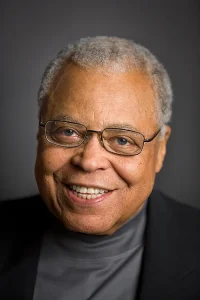
It is with great sadness that The Black History Channel announces that the great and beloved actor, James Earl Jones, has passed away. He was 93. James, who's booming voice conjures fond memories of King Jaffe Joffer of Coming to America, Mufasa the Lion in The Lion King, and the ominous Darth Vader in Star Wars, was like a father or grandfather to his fans, and he will be sorely missed.
James Earl Jones was born in Arkabutla, Mississippi on January 17, 1931. He was raised by his grandfather and grandmother, and developed a a stutter from a young age. When his family moved from Mississippi to Michigan, James became almost completely mute. However, when one of his teachers discovered he wrote his own poetry, she encouraged him to read it aloud in class and this helped him to overcome the impediment.
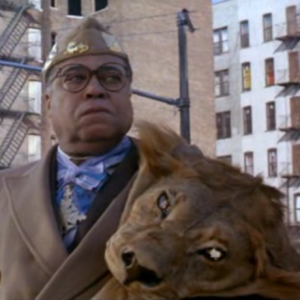
James' awards include a Lifetime Achievement award, three Emmy awards, one Golden Globe ward, one Screen Actors Guild ward, three Tony awards, and various honorary awards. In fact, James was considered an EGOT because he was one of a small group of actors who have won an Emmy, Grammy, Oscar, and Tony. It's safe to say that everyone loved him.
James did a lot of living between his birth in 1931 and his death on September 9, 2024. Please check out the following documentaries:
Biography.com - https://www.biography.com/actors/james-earl-jones
The History Makers - James Earl Jones - https://www.thehistorymakers.org/biography/james-earl-jones
The above video is originally located at this url: https://youtu .be/DJybA1emr_g?si=DDxsHZ4Yn-N1bMtR
"Copyright Disclaimer Under Section 107 of the Copyright Act 1976, allowance is made for "fair use" for purposes such as criticism, comment, news reporting, teaching, scholarship, and research. Fair use is a use permitted by copyright statute that might otherwise be infringing. Non-profit, educational or personal use tips the balance in favor of fair use."
How to Draw a Graphic Novel

For all our multi-talented children and teens of color out there -- if you are a writer or a comic-lover, you will love your copy of How to Draw a Graphic Novel, by Balthazar Pagani. The moment you open the first pages you will be drawn to the clever, colorful, can’t-put-this-book-down appeal of this essential “how-to” book for creatives.
After defining what graphic novels are (“a self-contained story told in comic form”), readers are whisked backward in time to examine the history of graphic novels. Did you know that comics became successful in the US during the 1930s? And did you know that comics, or “manga,” as they are known in Japan, date back to the 18th Century? It’s true! And in Europe, the first graphic novel, penned by on Rodolphe Topffer, debuted in 1827.

Author Pagani wastes no time guiding readers toward producing a great graphic novel. First, he asks them to decide whether they’re an artist or a writer… or both. Then there are quick lessons in copyright basics, printing and binding, and even how to save files in a digital format. Beyond this, readers interested in learning to write graphic novels learn to use “good working methods” to produce the best book they can. They also learn to research their subject and find and practice their own drawing style in order to create harmony between the words and the images.
Once this crash-course is out of the way, future graphic novelists are schooled on the various layout styles, including panels and balloons. They learn how to create their own font, and are given a list of “essential tools” for becoming a graphic novelist. These tools include pencils, watercolors, felt pens, drawing boards, graphic tablets, etc.
This book almost has too many tips and features to mention. There are tips for drawing characters and scenery. Tips on lettering and layouts. There’s a section explaining what a storyboard is and why you need one, and there are also gems of knowledge about inking and coloring. Of course, no great instructor would forget to offer lessons on proofreading, keeping deadlines, getting published, and making it into international comic book fairs. All of this information is presented in straightforward and fast-paced prose that will keep readers turning the pages. However, the prose may be a better fit for upper elementary, middle grade, and even young adult students. That being said, Mr. Pagani’s illustrations are so rich in color and inviting in nature, they are sure to be enjoyed by ALL ages.
Use this book as supplemental reading in language or art classes. Comic-lovers can also use it to learn about their favorite cult creators, including Will Eisner, Jackie Ormes, Osamu Tezuka, and more. Enjoy!
**This review also appears on our Sister Site - Picture Book Depot - https://picturebookdepot.com/product/how-to-draw-a-graphic-novel/
